




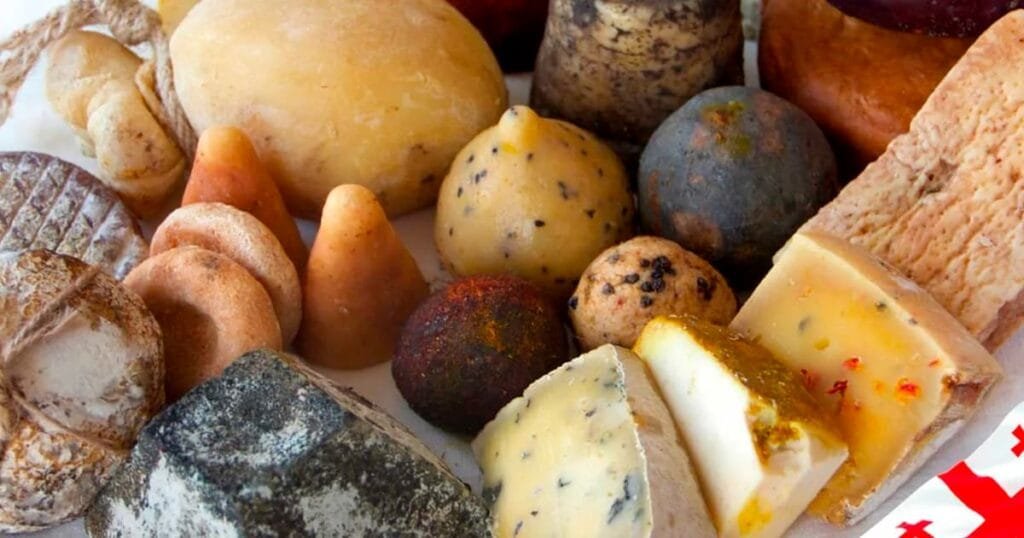
Discover the most popular Georgian cheeses, from Imeretian and Sulguni to Guda, and learn how these traditional dairy products shape Georgian cuisine and culture.
Traditional Georgian Cheeses
Imeretian Cheese
Imeretian cheese is one of the most common and widely used cheeses in Georgia. It is made from cow’s milk and has a soft, porous texture with a mild, slightly tangy flavor. Because of its melting properties and balanced taste, it is considered the best cheese for making Khachapuri, the iconic Georgian cheese-filled bread.
This cheese is typically fresh or lightly cured, making it ideal for both cooking and eating on its own. Its versatility has made it a staple in Georgian households and restaurants.
Sulguni
Sulguni is a traditional cheese from the regions of Samegrelo and Svaneti. It is made from cow’s or buffalo’s milk and is known for its elastic, layered texture. The cheese is prepared by stretching thin slices of fresh cheese in hot water or milk, which creates its characteristic layered structure.
Sulguni has a slightly sour and salty taste, similar to mozzarella but with a stronger flavor. It is often used in baking, frying, or eaten fresh with bread and herbs.
Sqibu
Sqibu is a special variation of Sulguni that includes dried mint as a flavoring ingredient. This round-shaped cheese has a hole in the center, resembling a millstone. In the Megrelian dialect, the word “sqibu” literally means “millstone,” which reflects its distinctive shape.
The addition of mint gives Sqibu a fresh, aromatic profile that pairs well with traditional Georgian dishes and local wines.
Goat Cheese
Goat cheese is another traditional variety, particularly associated with Samegrelo. It is typically hard and crumbly, with a strong and distinctive flavor. Because it is produced in relatively small quantities, it is considered a specialty product and is less commonly found in mass markets.
This cheese is often enjoyed with bread, herbs, and vegetables, and is valued for its bold taste and artisanal production methods.
Smoked Sulguni
Smoked Sulguni is a variation of the classic Sulguni that undergoes a smoking process lasting several weeks. This process gives the cheese a deep, smoky flavor and a firmer texture.
Smoked Sulguni can be found in different shapes and sizes, including round forms and braided strands. It is often served as an appetizer, paired with bread, vegetables, or traditional Georgian sauces.
Shredded (Braided) Cheese
Shredded or braided cheese is traditional in southern Georgia and the mountainous regions of Adjara. It is made using the cream of cow’s milk and shaped by creating a hole in the center of the cheese, then braiding the strands and preserving them in salted water.
This cheese has a chewy texture and a salty taste, making it a popular snack and a common accompaniment to drinks and light meals.
Compact Cheese
Compact cheese is produced from shredded cheese. The cheese is cut into layers, separated, and then placed in cream, creating a dense and highly nutritious product. Traditionally, compact cheese is stored in pots that are buried in the ground, a method that helps preserve it and maintain its quality over time.
This traditional preservation technique reflects Georgia’s long history of dairy production and rural food storage practices.
[cta_doble titulo=”Hi, I want to book a car to explore Georgian gastronomy” frase=”Ready to discover authentic Georgian cheese and cuisine? Rent a car and explore Georgia’s best food destinations!” texto_boton=”Book Now” url=”https://carsandrooms.ge/” telefono=”+995555123456″]
Guda Cheese
Guda is a large, yellowish-gray cheese that is a traditional component of Tusheti cuisine, a mountainous region in Georgia. The name “Guda” comes from the method of preparation, as the cheese matures inside a sheepskin bag called a “guda.”
This aging process gives the cheese a unique flavor and texture, often stronger and more complex than fresh cheeses. Guda is typically used in cooking or eaten with bread and local herbs.
Factory-Made Georgian Cheese
In addition to traditional artisanal cheeses, Georgia also produces factory-made cheeses using pasteurized cow, buffalo, or sheep milk. These cheeses often have large holes and a shape similar to Guda, which can cause confusion between the industrial and traditional varieties.
While factory-made cheeses are more widely available, they lack some of the distinctive characteristics and cultural value of traditionally produced cheeses.
Sulguni Rolls and Culinary Uses
Sulguni is one of the most versatile cheeses in Georgian cuisine. Due to its soft and elastic texture, it can be used to prepare a wide variety of dishes. One popular preparation is Sulguni rolls, which are filled with different ingredients such as ground nuts, bacon, estragon, cottage cheese with mint, and sweet pepper.
These rolls can be served as appetizers, snacks, or part of a traditional Georgian meal. The ability to combine Sulguni with both savory and aromatic fillings highlights its adaptability and importance in Georgian gastronomy.
The Cultural Importance of Georgian Cheese
Cheese in Georgia is more than just a food product; it is a symbol of regional identity, tradition, and hospitality. Each region has developed its own methods of cheese production, influenced by local climate, livestock, and cultural practices. From mountain shepherds to coastal dairy farms, cheese-making techniques have been passed down through generations.
Today, Georgian cheeses are gaining international recognition for their unique flavors and traditional production methods. Whether enjoyed in classic dishes like Khachapuri or as part of modern culinary creations, Georgian cheese continues to represent the richness and diversity of the country’s culinary heritage.
[cta_doble titulo=”Hi, I want to book a car to explore Georgian gastronomy” frase=”Ready to discover authentic Georgian cheese and cuisine? Rent a car and explore Georgia’s best food destinations!” texto_boton=”Book Now” url=”https://carsandrooms.ge/” telefono=”+995555123456″]